Therapy Courses
60 Somatic Therapy Exercise Cards - Flashcards for Somatic Therapy Body Centered Healing
60 Somatic Therapy Exercise Cards - Flashcards for Somatic Therapy Body Centered Healing
Best for: Adults · Emotional regulation
- Instant PDF download
- Unlimited client use
- Print as many as you need
- Money-back guarantee
Couldn't load pickup availability
Buy 3 or more, save 20%. Use code 3ORMORE at checkout.
Or get this plus every resource in the shop with the Vault ($70 every 3 months). Learn more
Somatic exercise cards are prompts for trying body-focused practices such as noticing sensations, gentle movement and grounding. This printable PDF contains 60 exercise cards with step-by-step instructions, designed to give therapists prepared options to select and adapt with clients.
The set includes movement, breathing, stretching and mental exercises. It is a paid digital download formatted for US Letter (8.5 × 11 inches), not a physical card deck.
Choose the 60-card Somatic Exercise PDF →
What's included in the printable somatic cards?
- One PDF containing 60 somatic exercise cards.
- Step-by-step exercise instructions.
- Movement, breathing, stretching and mental exercises.
- A US Letter print layout that you can print or view on a device.
Examples visible in the product gallery include Body Gratitude Exercises, Tai Chi Movements, Wall Resistance Exercise, Lazy 8 Breathing Exercise and Guided Self-Hug. Review the images for the style and instruction format.
Choose and print the pages you need. The 8.5 × 11-inch specification describes the PDF layout; it does not promise a pocket-sized deck or a separate A4 edition.
How to choose a somatic exercise for a session
Begin with the client and the session task, then choose a card. A larger movement or a longer exercise is not automatically a better option.
| Session task | Possible starting point | Check first |
|---|---|---|
| Explore a gentle movement | A movement card, such as the pictured Tai Chi Movements. | Comfort, balance, mobility and whether a seated adaptation fits. |
| Notice a familiar breathing pattern | A breathing card, such as the pictured Lazy 8 Breathing Exercise. | Whether attention to breathing feels comfortable; offer another option. |
| Explore support or physical contact | The pictured Wall Resistance Exercise or Guided Self-Hug. | Physical suitability, permission and alternatives without pressure or touch. |
| Try a reflective body-awareness prompt | The pictured Body Gratitude Exercises. | Whether gratitude language fits; neutral noticing may be more comfortable. |
These are selection examples, not a claim that the PDF is divided into these exact sections. Read the selected card before introducing it. Adapt the task to the person's health needs, preferences and current care plan.
A complete example: notice a point of support
This original, low-demand activity can be run without buying the cards. It illustrates a choice-led way to introduce body awareness; it is not a reproduced card or a promised item in the deck.
Skill: describe a present-moment sensation and make a choice about continuing. Materials: an ordinary supported seat or another comfortable position. Time: allow around two minutes, with permission to finish earlier.
- Offer a choice. Say: “Would you like to notice a point of support for a moment, look at something in the room, or skip this?”
- Let the client choose the focus. If they choose support, ask: “Is there a comfortable place where the chair supports you, or where your hands rest?” Do not require feet on the floor or a particular posture.
- Invite a simple description. Say: “You might notice contact, warmth, pressure, or nothing very clear. Any of those is okay.” Keep eyes open if preferred and breathing natural.
- Check the experience. Ask: “Is this comfortable enough to continue, or would you like to change focus?” If they prefer the room, invite a description of one visible object's colour or shape.
- Review without expecting calm. Ask: “What did you notice? Would you choose that focus again, try something else, or leave it here?”
Worked example: A client says, “I can feel my hands resting on my legs, but I don't want to focus on my chest.” The therapist replies, “We can keep the focus on your hands, look around the room, or stop.” The client chooses to look at a blue folder and describe its shape. The learning is choosing and describing an experience, not achieving a particular emotional state.
Adapt somatic activities for individuals, groups and online sessions
- Individual sessions: offer two suitable options and practise one briefly. Ask what the client would change before suggesting independent use.
- Groups: demonstrate a chosen activity and offer an observer role. Do not require closed eyes, touch, movement or sharing private bodily experiences.
- Telehealth: choose an activity that fits the client's space. Use a licensed page through your approved sharing method when appropriate.
- Mobility or pain considerations: use comfortable positioning and suitable adaptations. Omit an exercise that does not fit the person's physical needs.
- If inward attention increases distress: pause, offer an external focus or return to the agreed support approach. Continuing is optional.
These cards support activity selection and guided practice. They do not guarantee nervous-system regulation, release trauma from the body or replace individual assessment and treatment.
Exercise cards, check-in cards or conversation cards?
- “I want an activity with instructions”: choose this 60-card exercise PDF.
- “I want brief body-awareness questions”: compare the Somatic Check-In Cards.
- “I want a larger discussion prompt bank”: explore the separate 100 Somatic Conversation Cards.
- “I want the teen-focused 60-card set”: review the separate 60 Somatic Exercise Cards. It is a different listing; compare contents before buying both.
For additional session ideas, read 30 somatic therapy activity ideas. These article ideas are not a contents list for this PDF.
Prepared somatic exercise prompts for your toolkit
You can use the complete example above with no prepared materials. Choose the paid 44-card PDF if you want a reusable selection of written exercise instructions to reduce preparation.
Professional use: choose the Therapist licence for single-practitioner use and review the applicable client-use permissions. The listed Therapist licence does not allow resale or use in a paid course. Check redistribution permissions before sharing files.
View purchase and licence options for the 60-card PDF →
Frequently asked questions
How many somatic exercise cards are included?
This listing contains 44 exercise cards in one PDF. The separate 60-card product has its own listing and contents; it is not automatically included here.
Are these physical cards?
No. You receive a digital PDF formatted for US Letter (8.5 × 11 inches). You can print it or view it on a device.
How are exercise cards different from conversation cards?
Exercise cards provide instructions for doing a practice. Conversation cards provide questions for discussion or reflection. Choose the format that matches your session task.
Can I use the cards in group therapy?
Select an activity that fits the group's needs, offer adaptations and make participation optional. Professional use must fit the purchased licence.
Does everyone need to close their eyes or focus on breathing?
No. Choose a suitable activity, offer an external focus when helpful and respect a preference to pause or observe. A single exercise does not suit everyone.
Is there a free PDF on this page?
No. The 44-card PDF is a paid product. The on-page activity and facilitation example are available to use without purchasing it.
Can I use these with my clients?
Can I use these with my clients?
Yes! Use them with as many clients as you like, for as long as you like. They're not for resale or for use inside a course you sell.
I am not a therapist, can I use these on my own?
I am not a therapist, can I use these on my own?
Yes! These worksheets can be used by anyone wanting to learn about the topics. They are not for use in crisis or emergency situations.
How do I integrate these into my practice?
How do I integrate these into my practice?
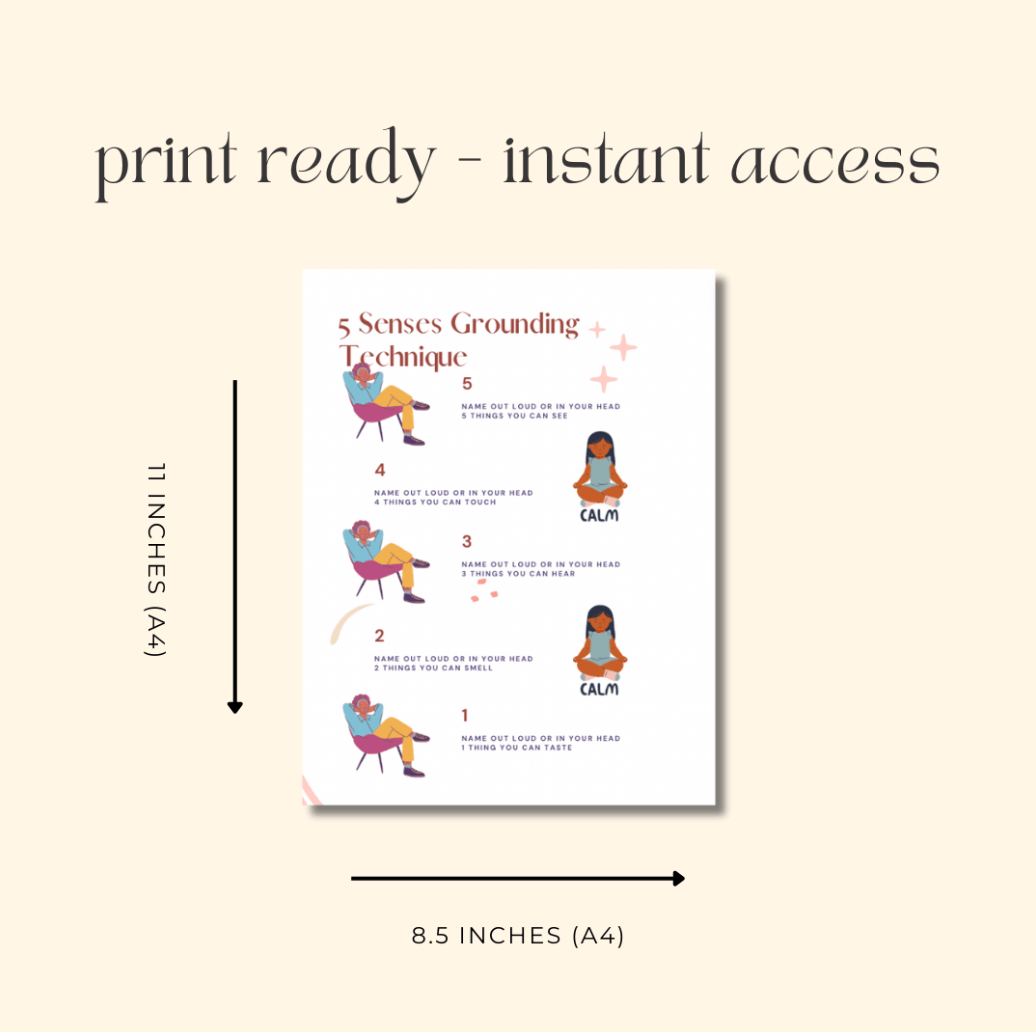
All of our worksheets are print ready. So just choose the pages you want to print and off you go. You can give them to clients to take home or use them for your notes. We also offer some digital worksheets.
Shipping & Delivery
Shipping & Delivery
Most items are instant access via email. These products will be noted as 'digital download'. The physical workbooks will also be noted. They are POD meaning that the book will only be printed once the order is placed. Once the order is placed the book will print in 2-3 days and shipping usually takes up to 7 days.
Return Policy
Return Policy
We offer free returns & money back guarantee on all products. If you don't like what you purchased just let us know and we will refund your money.